Chapter 1
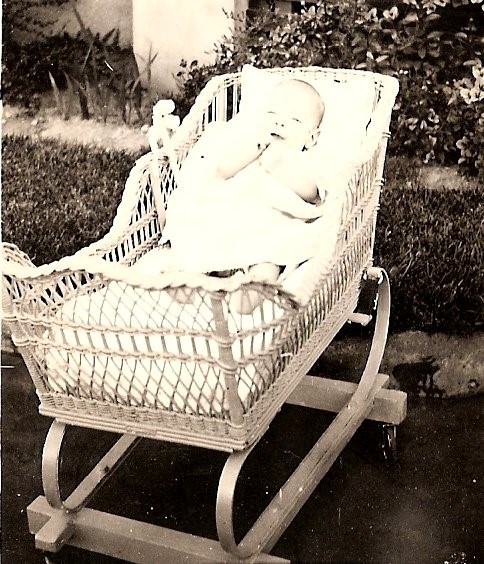
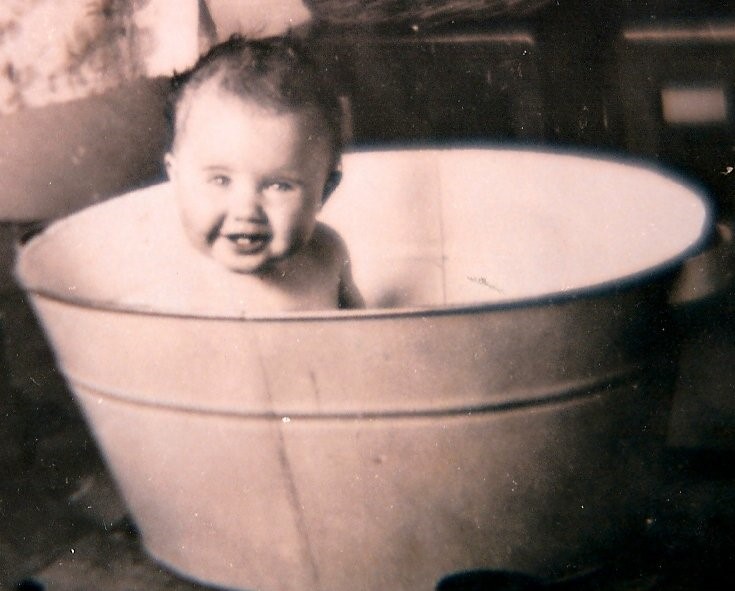
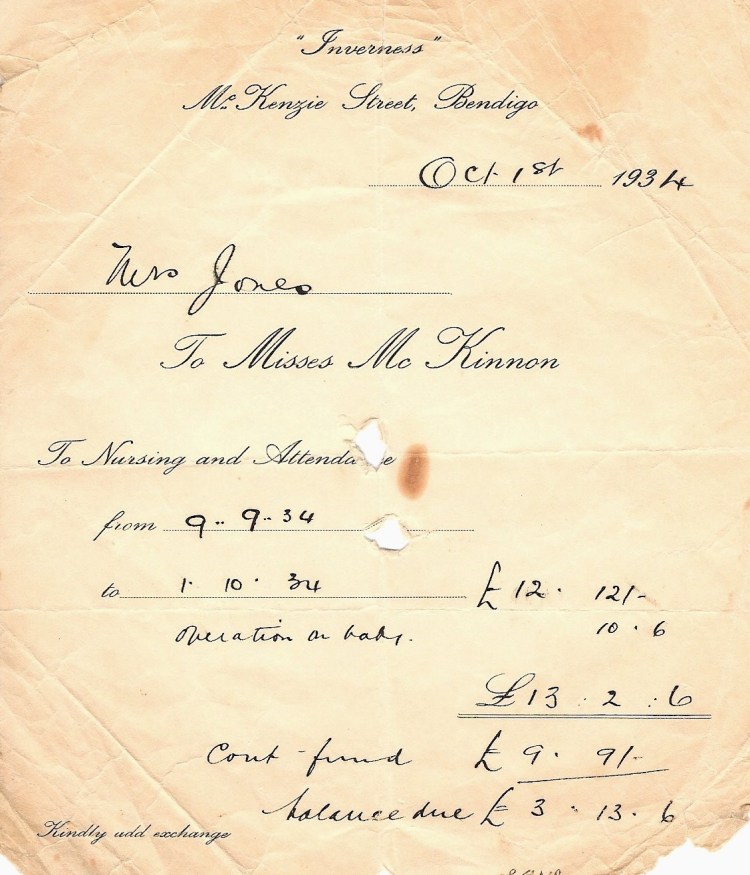
My entry into the world on 10 September 1934 came at a time when the world was emerging from the worst depression in history and an unknown painter by the name of Adolph Hitler was beginning his rise in politics which was to lead to the second world war and thus change the course of history.
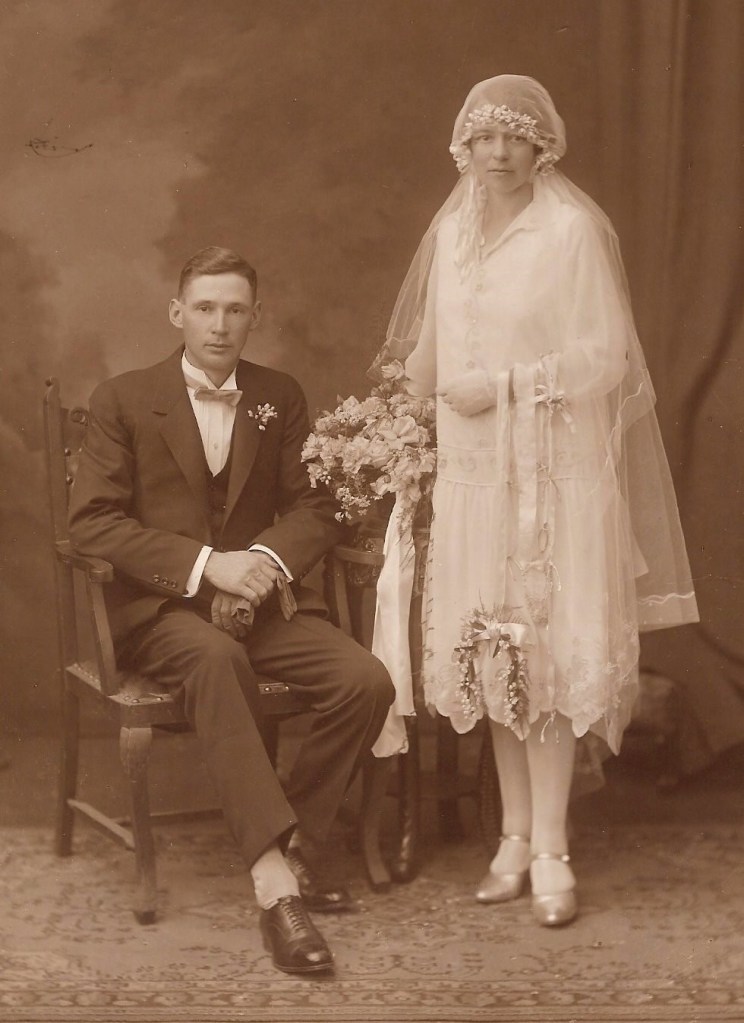
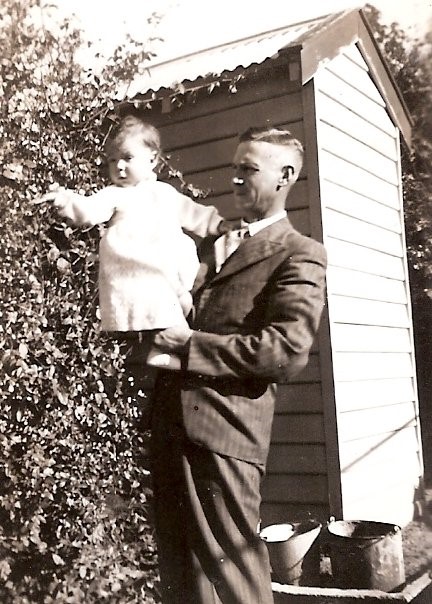
My Father, a fitter and turner at the North Bendigo Railway Workshops, was born in Malmsbury, where he grew up with his brother and two sisters. He attended the Primary school there and then rode his bike the 6 miles into Kyneton for two years to complete his Intermediate Certificate at the Secondary School. After briefly working at the Post Office in Malmsbury he entered his apprenticeship at the railway workshops at Newport. On completion he spent a short time at Dimboola (where his sister Florence lived) and then went to Bendigo and the Workshops where he worked for the next 49 years, initially specializing in engine braking systems and then later, as a Leading Hand.
My Mother was a third generation Bendigonian and attended the North Bendigo Primary School and later the Bendigo Girls School. On leaving school she worked as a shop assistant at Monaghans store in Mitchell Street. She was the eldest of five children born to Glen and Anna Emelia (Ludeman) Doig. Doris died aged 17 in 1922 from a disease thought to be diphtheria , and Glen, who was not married died on 5 May 1935, aged 29, as a result of drowning in two inches of water after during an epileptic fit. He had been working near Woods Point with Grandpop Doig looking for gold following the Depression.
Both Glen and Bill worked for their father around Bendigo and as far north as Swan Hill as building contractors. William (Uncle Bill) and Jean married and lived in Bendigo. Glen and Bill had bought a T model Ford but during the depression they had to put it up on blocks as they could not afford to run it. The Doig family was a very close family and all lived within a kilometre of each other. This extended family also included my Mother’s cousin Edward (uncle Ted) Thompson who had eventually been brought up by his Grandmother, my Great Grandmother, following the death of his Father (before his birth).
Ted and my Mother had a very close friendship. Eventually Ted married Queen Hesse and they built a house opposite my parents.
My parents were married in 1928 after a long courtship and moved into a house built by my Grandfather on land purchased from him. It was at the end of the Great Depression, almost six years later, that I appeared on the scene and may well have resulted from a holiday in Sydney during the Christmas holidays of 1933/34. The holiday was mentioned on occasions as having great significance but I was never informed of the specifics. This period must have been a period of mixed emotions for the family, for within two years of Glen’s death, on 5 February 1937, Grandmother Doig (Millie) died from a heart condition caused by angina. At one stage she had even been advised to cut her hair as it would help her angina.
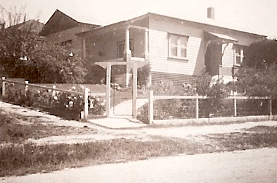
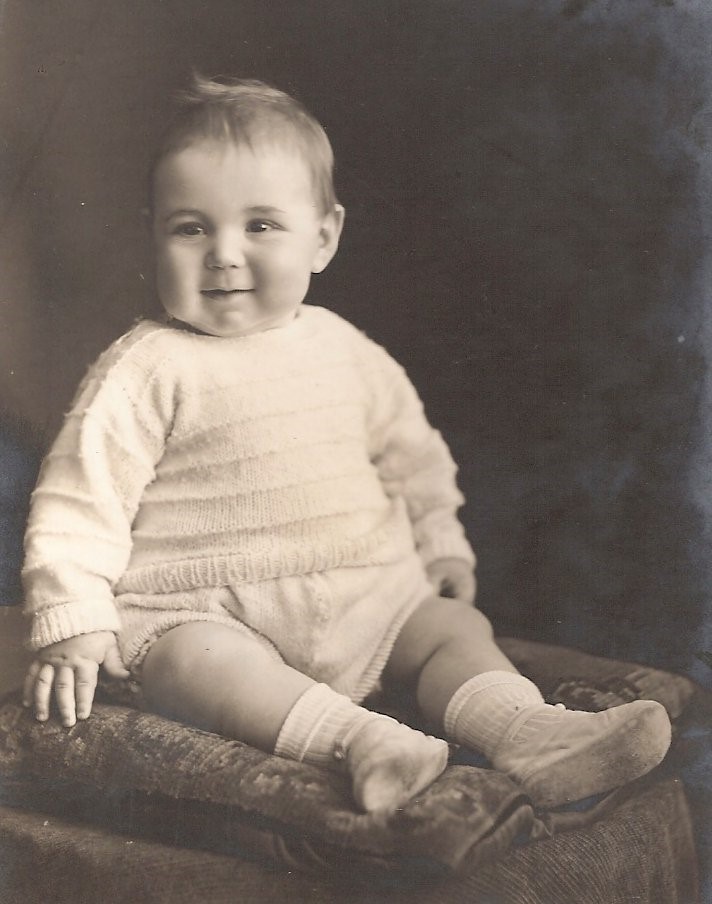
I remember very little about my first five years, the first memories being several events about 1939. The first was at home in Bendigo being stood on a kitchen chair near the gas stove and being dressed by Grandmother Jones so that we could go and see Mum and my brand new sister Elizabeth Anne (b27April1939). I also longed to be able to see over the edge of the table. Another memory was of visiting my Grandparents at Malmsbury and being dressed in a pair of my Grandmother’s extensive bloomers and put on Dad’s old horse Ginger. Someone gave the horse a belt on the backside and he took off at a great rate without me. This incident probably accounts for a total lack of interest in horse riding from there on. It must have been about this time that I remember the disastrous 1939 bushfires. I have vivid memories of Malmsbury being totally surrounded by flames and being very frightened. Similarly the trip home to Bendigo on the train was equally memorable with vast areas of blackened countryside and smouldering trees and stumps. The memory of this scene probably helped me later understand the trauma that befell Aunty Edie at this time.
Then, a policeman, had raided an illegal gambling den in Melbourne and caught the then Commissioner Sir Thomas Blamey there. He was rewarded by a posting to Woods Point. On Black Friday while he was away in hospital with appendicitis, the fires bore down on the town and Aunty Edie only had time to grab the two girls, a fur coat, her purse and take refuge in the Goulburn River where she plastered the girls in mud. They lost everything they possessed including their photos and Uncle Thene’s (an original Anzac) war medals. Aunty Edie later suffered a breakdown and Margaret was sent to Aunty Flo for a while.
The first memories I have of my toys is of a set of wooden blocks which had pictures glued to each side and they could be arranged to make a total of six fairy tale pictures. I also had a set of cut-out wooden farmyard animals which could be stood up and made part of a make believe farm yard. I was also given a book of the Royal family and you were able to cut out the various ceremonial robes and attach them to the figures of King George V1, the Queen, and the Princesses Elizabeth and Margaret. At an early age I was given a book of cut-out objects (including a revolving Merry-go-round) which was far too complicated for me at the time. Dad helped me make this particular model which actually worked. After this the book was put away until I got older but I cannot recall its ultimate fate.
My teacher in Grade 1 and 2 was Miss Bennett. I remember her as a short elderly lady (which doesn’t mean that she was). One particular event which has always stayed with me was when the School Dentist visited the school when I was in about grade 2 and after an inspection he decided to take out ten of my teeth there and then without any contact with my parents. When the job was done I was asked if I had any brothers or sisters who could take me home. Without hesitation I told them I had a sister – Catherine Fulton – who would look after me!! This must have caused some mirth. Catherine, who was our next door neighbour, duly delivered me home to somewhat stunned parents.
I remember with great affection the smell of the pastels and the crayons, and was very proud of my leather schoolbag and slate. I believe my interest in drawing began at this early stage. Other memories include the longing for the day when we would be big kids and have our classroom up the stairs on the second floor and have pens and inkwells in our desks. Two exciting events that occurred each day were the cleaning of the blackboard and the distribution of milk bottles to each student during the morning. In the winter time the milk was warmed by the fire and if you were especially lucky you would be asked to get another piece of wood for the fire. However this was mostly the job of the bigger kids.
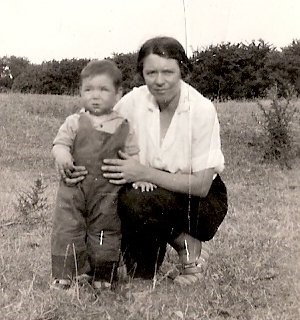
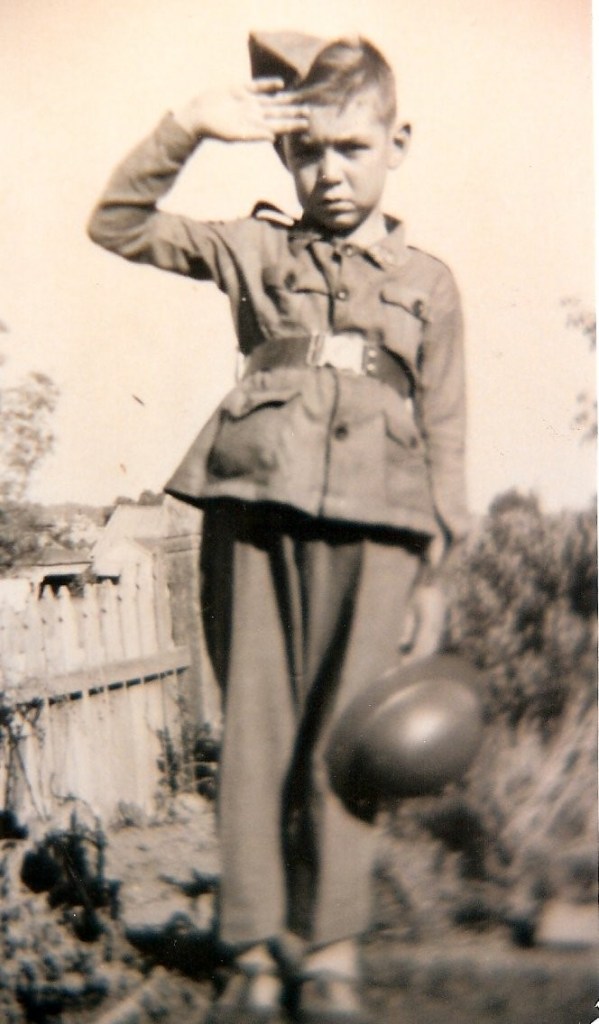
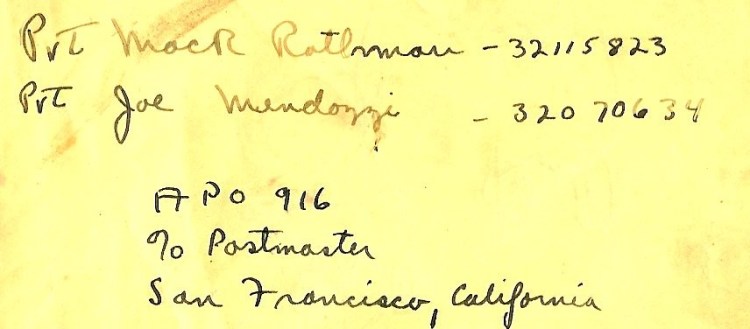
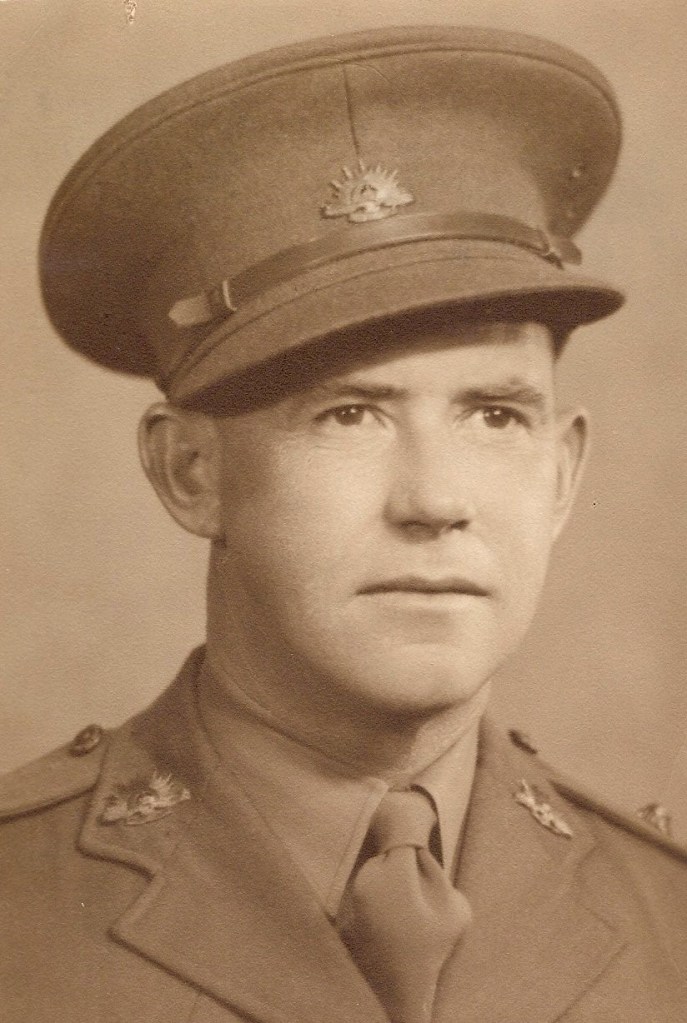
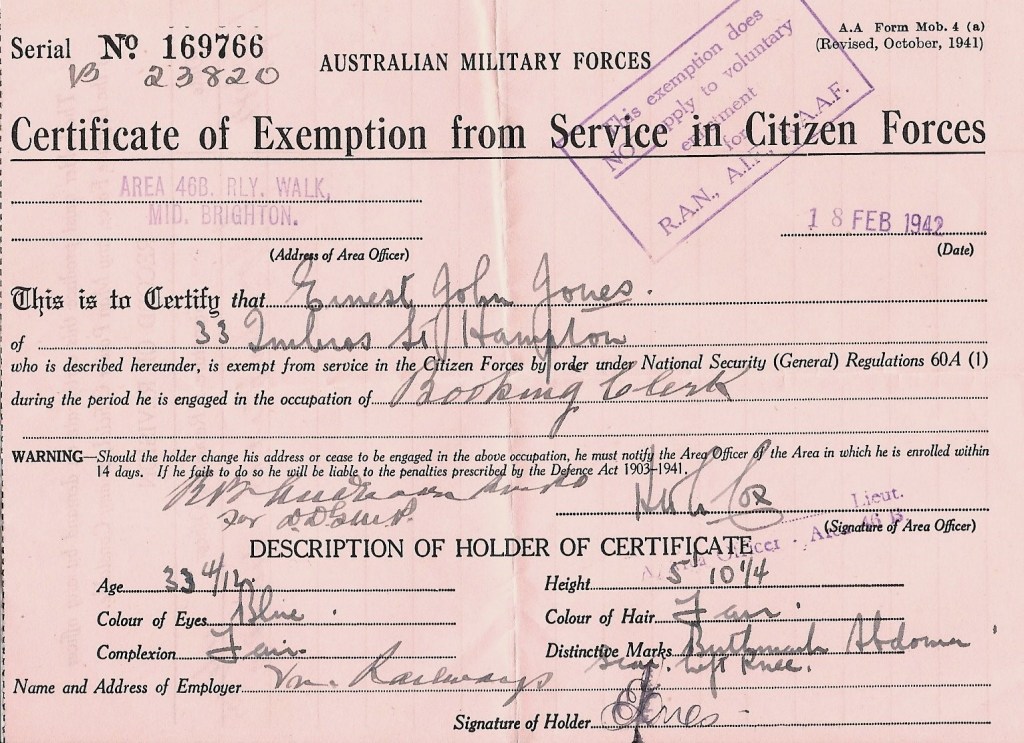
Although I remember very little about the beginning of the war the events following the entry of Japan are very clear in my memory. There was very little impact on our family as no immediate members were called up. Dad was too young for the first war and too old for the Second. However he was also employed in an essential industry and would not have been able to join up. I always felt a sense of disappointment that my Dad was not called up as it seemed very romantic to have your dad or a brother fighting a war overseas. Dad had been a member of the volunteer lighthorse in the late 20’s and early 30’s. He had reached the rank of staff-sergeant. At this stage he had his own horse “Ginger”. During the war he was a member of the Volunteer Defence Corp (VDC) and regular training sessions were held on the Hustlers Hill behind our place where they threw what later became known as “molotov cocktails” at the concrete and steel remains of the old mine battery. An even greater impact was felt with the arrival of thousands of Australian soldiers to a camp set up in the Showgrounds and soon after by the arrival of hundreds of US servicemen who were billeted in the area. We had two men staying with us. They were Pte Mack Rothman 32115823 and Pte Joe Mendozza 32070634
This was a very exciting time for an eight year old boy. They slept in my room which was a sleepout at the back of the house and I used to sit and play with their equipment while they dozed. I have always remembered the distinctive smell of their belongings. When they were leaving one gave me his Marine peaked cap complete with brass buttons and Marine insignia. It was my great pride and joy. They also gave me a small reflex camera which took very small photos. We believe that both men were killed in the landing at Guadalcanal soon after. I used to love to go over on the hill and watch the Australian soldiers training in their Bren Gun carriers on the slopes of the mullock heaps on the Hustler. It was even more exciting when one would tip over backwards. Later Barb and I and others would skim down these slopes on sheets of corrugated iron (surprisingly with very little damage to ourselves). The war seemed to become more and more important in our lives – probably because I was gradually more aware of what was happening. We had regular air raid practices which involved being taken out of the school grounds to the paths leading down to Rosalind Park and made to lie in the bluestone gutters with our faces to the vertical side of the gutter. Working bees were then held to dig huge zig-zagging air-raid trenches across the vacant area of land between the back of the school and the baths.
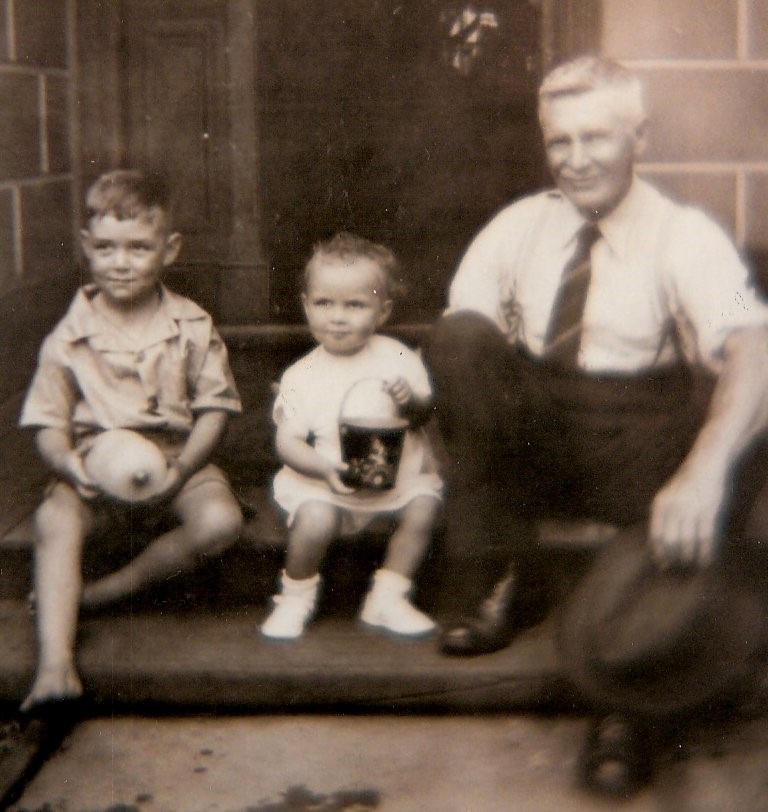
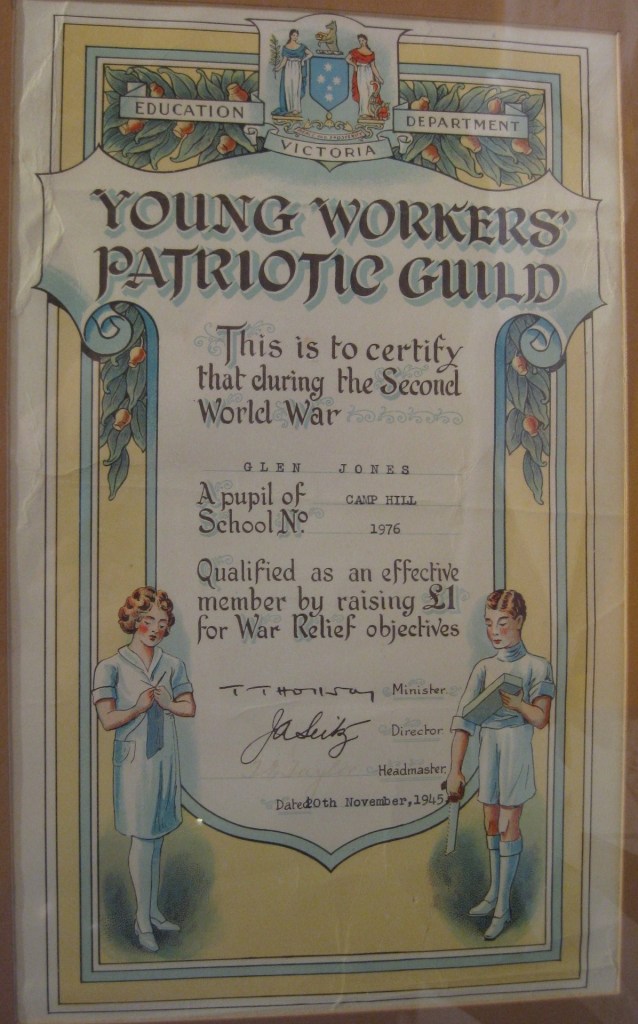
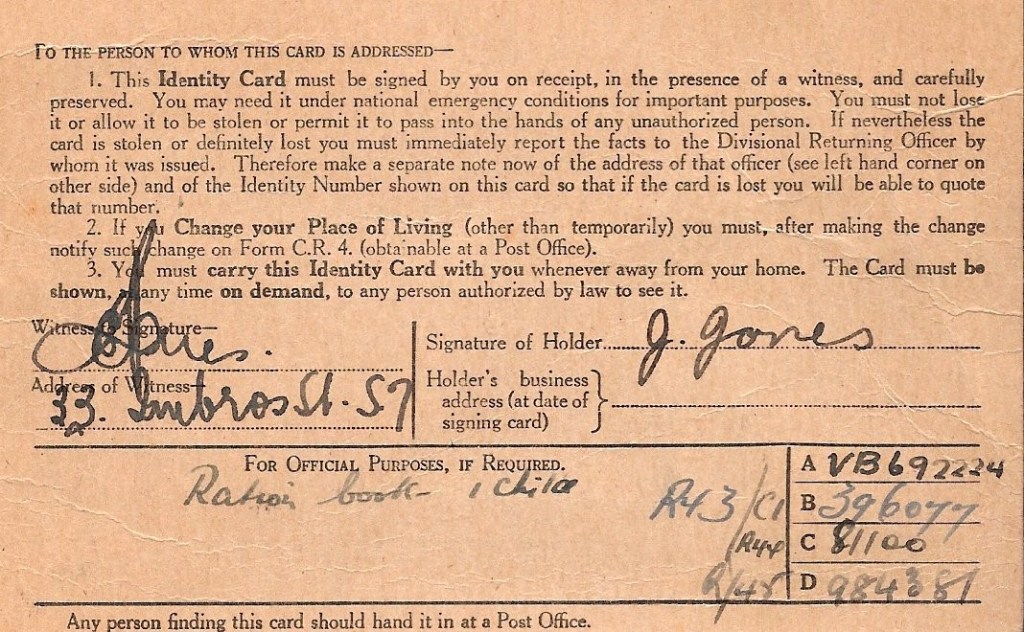
We even built our own air-raid shelter in the back yard. It was about 2 metres deep with a corrugated iron roof covered with dirt. It was a good cubby house! Events of the war were discussed with great earnestness and I recall Mr Fulton leaning over the back fence to solemnly tell Dad that the “Hood” had been sunk. The son of one of our neighbours, the Hopkins, had been seriously injured in a mishap in England when he walked into a whirling propeller. He recovered only to be killed later as a rear gunner in a Lancaster over Germany. Another neighbour, Norm Gallagher , was taken prisoner of war by the Japanese. At school we contributed two shillings a week towards War Savings Bonds. When you reached five pounds you were given a certificate. There was a very exciting occasion when a DC3 crash landed out at Welsford (just south of Bendigo) and the pilot was killed when the plane hit a tree at the end of the emergency runway. Dad dinked me out to see the wreckage. On another occasion I climbed over the fence of the Showgrounds to see a real plane (Wirraway) in one of the sheds. It was a static display for training the Junior Air Corps (youngsters under 18) which Ray Brauman had belonged to. The only other war plane we saw was the famous Lancaster bomber “G for George” which flew over Bendigo on a fundraising exercise. Ration books and coupons were an essential part of our life.
Many normal activities continued and I attended Sunday School and sometimes Church at St Johns North Bendigo. I much preferred Evensong as it seemed much more musical and shorter than the Communion Service which seemed to drag on forever. I think that this perception has stayed with me ever since. I always felt that Mum had a beautiful voice and I used to fantasize that if she had her voice trained she would have been a world famous singer. It would have been about this time that Crimond became one of my alltime favourites. Mr Fulton told me how he used to often hear Mum singing lullabies to Anne and me as babies when we slept in the middle room
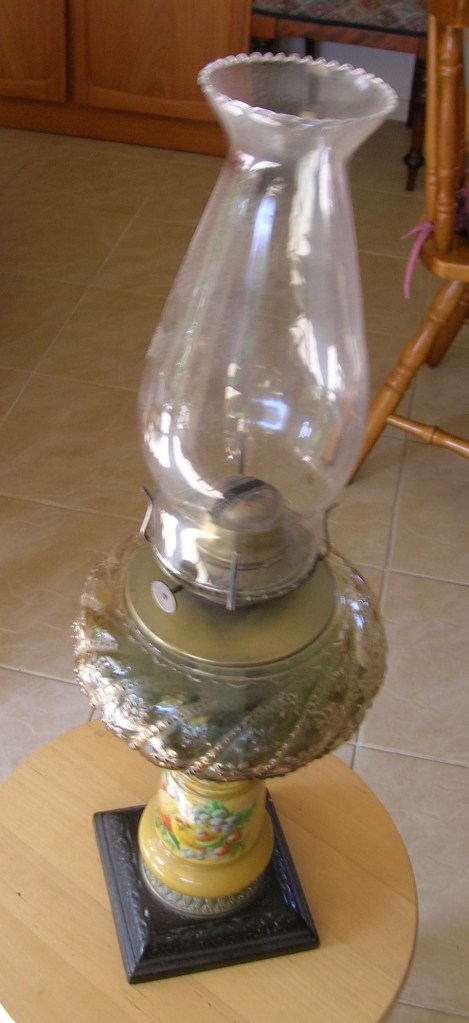
We regularly traveled to Malmsbury to visit the Jones Grandparents. This was always by train as we did not have a car and Dad was able to get a pass to travel free on the train. Malmsbury was always a very exciting place The old house had a musty smell which was, I think mainly the result of the kerosene lamps which were used for lighting. The kitchen floor was paved with bricks which gave a very rustic to the place. However it was a warm and cosy house with a small library that contained all the Mary Grant Bruce stories. There was a laundry outside, beside the door of which resided a pet galah in a cage. It only had one saying as far as I can remember and that was (guess what?) – “Hullo Cocky”. There was a barn at the back of the block and we used to love playing in and on the bales of hay piled there.
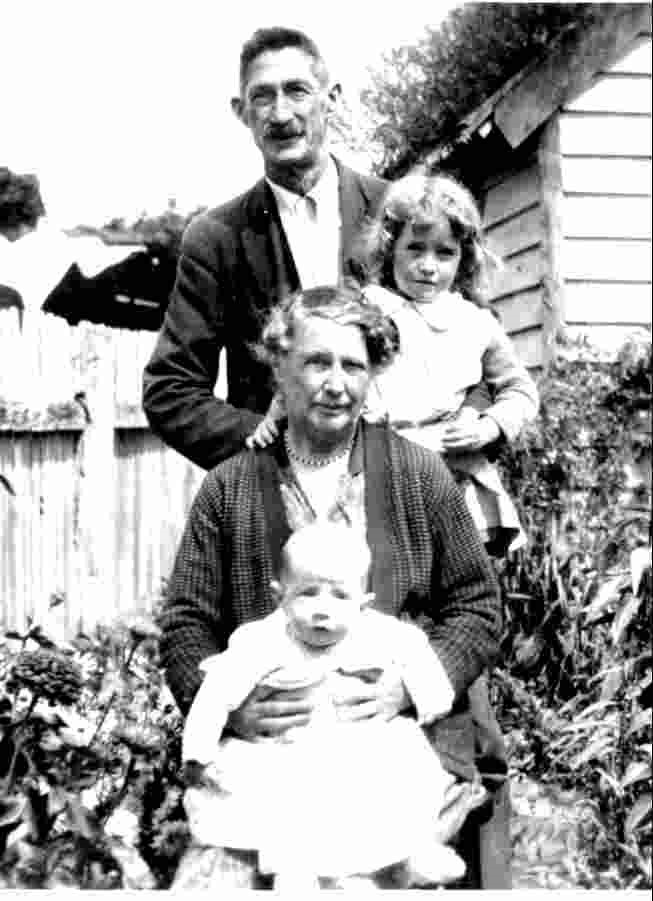
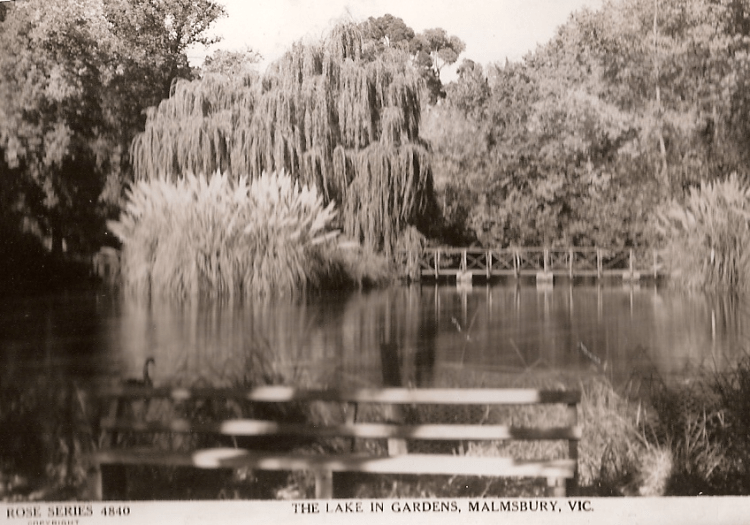
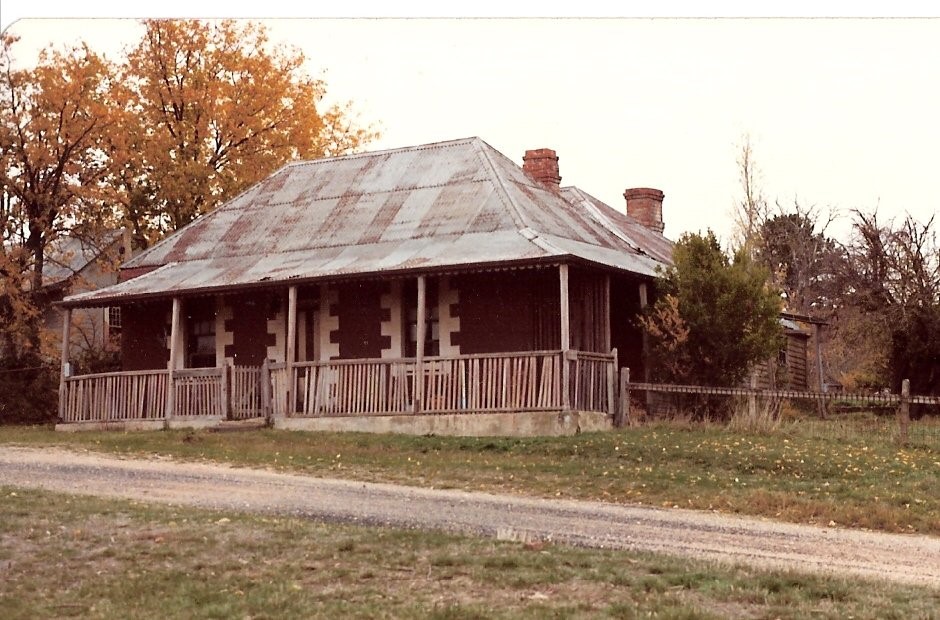
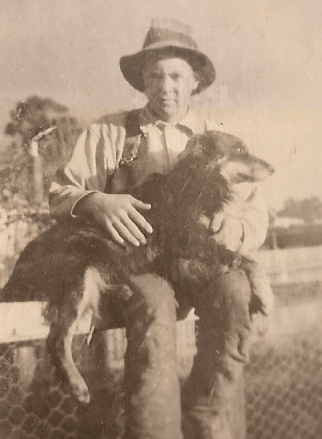
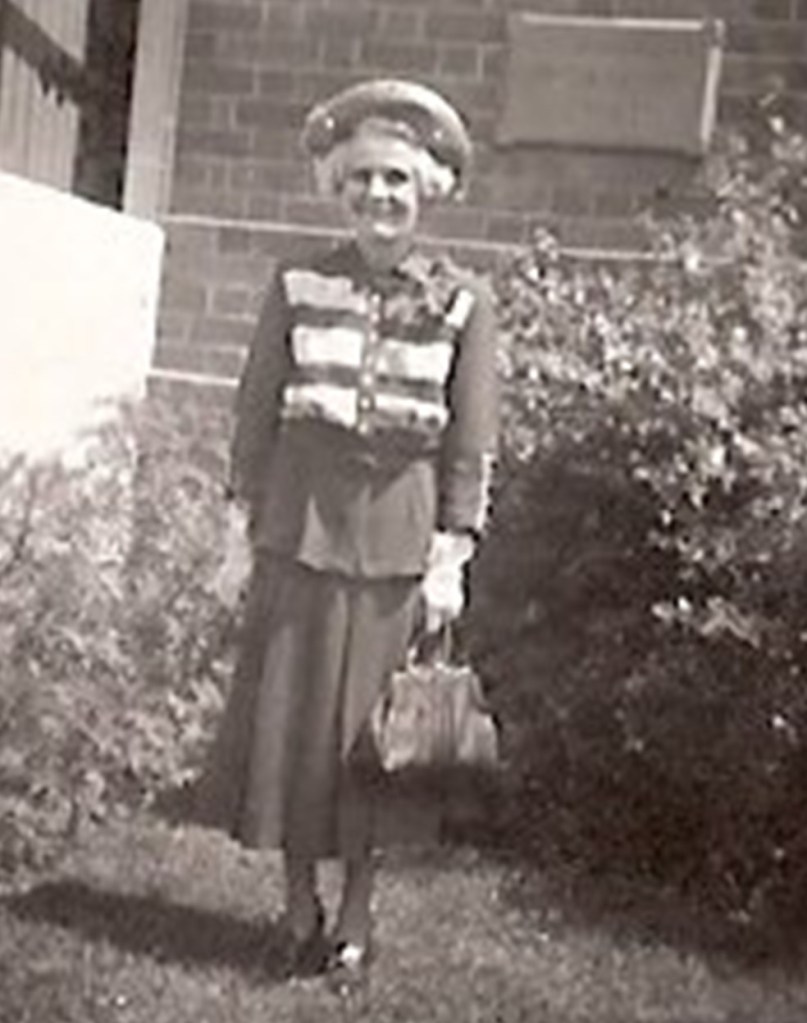
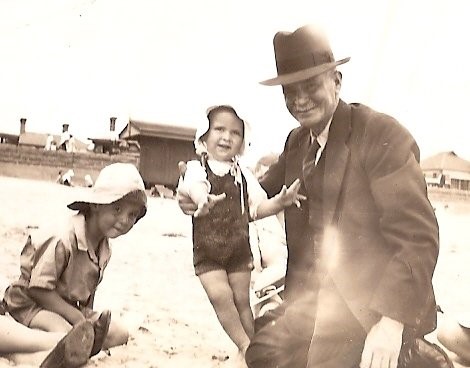
Grandfather Jones was a wiry and very cheerful person with a full head of very dark hair and a large dark moustache. His favourite pipe was never very far away. Grandmother (Bessie) was a rather severe person and I was always felt a little intimidated by her. However they were wonderful days with exciting things to do in the large barn at the back with its hay and loft. At the bottom of the hill were the gardens designed by Baron Von Mueller with their large pond, huge pine trees, maze, and lots of carolling magpies on the banks of the Coliban River. After my Grandfather retired from the Shire he became the gardener which I felt gave us almost a proprietary interest in the gardens. The smell of the pine trees remains with me as does the memories of the carolling magpies in the early morning. It was in these gardens that I first became acquainted with a Furphy tank on the end of which was the legendary verse:-
Good, better, best,
Never let it rest,
Until your good is better,
And your better best.
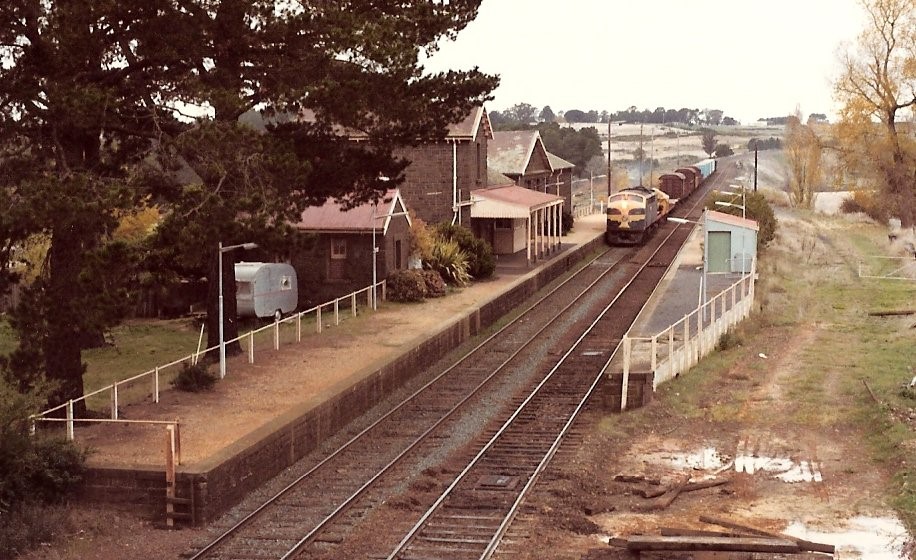
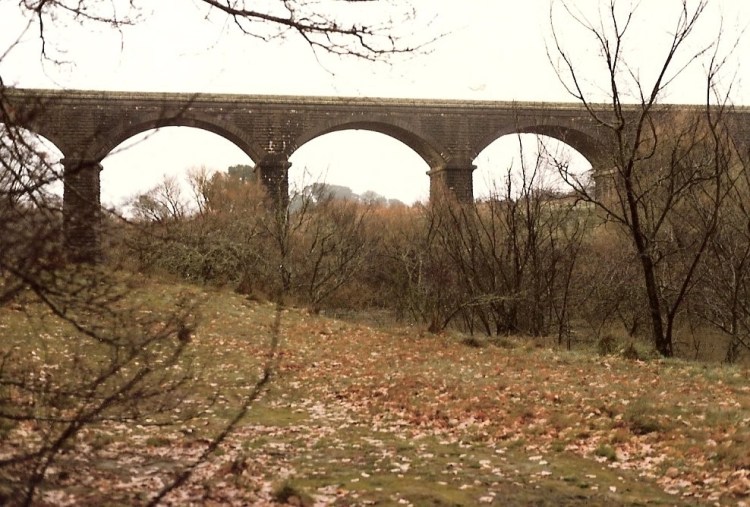
Then there was the magnificent huge bluestone five arch railway bridge where you could make your shout echo wonderfully. My father maintained that it was quite unique in that the stones were supposedly dovetailed together. One could walk on further to the solitude and beautiful scenery of the Malmsbury reservoir and the cemetery perched on the banks, where the Jones and Hollyman ancestors lay buried. Towards the end of the war Dad took the old shotgun and me for a walk across the paddocks looking for a rabbit. It first required a lot of negotiating with the store owner, Mr. Hoopell, as you required a permit at the time to buy ammunition, which only farmers were supposed to have. He seemed very loathe to sell any, and I recall thinking — “Didn’t he know that this was my father, who was a very important man. He worked on the railways”. After all that I don’t think we got any rabbits. Dad recalled, that as a lad , the family milked a cow and sold milk to many of the residents. Dad had to take the milk in ‘billys’ on his horse ‘Ginger’ to be delivered. He complained that it was very hard on his arms. The names of many of the town’s residents still strike a nostalgic chord – the Sullivans, Spences, Miss McCreary, Hoopells and our relatives, the Raysons. The magnificent old bluestone railway station was always an exciting place to visit, particularly in later years when I was able to wander off on my own to explore. Summertime was a particularly interesting time when the wheat trains would thunder through the station, across the bridge, and past the back of my Grandparents house. Gardens Bridge Sometimes there would be three engines belching vast plumes of smoke and pulling huge lines of trucks – the most I counted were forty five. They always gave a blast on their whistle as they approached the bridge which gave me time to rush up to the back fence to see it
About this time I received a very cruel blow when it was announced that the Thompsons were moving to Melbourne. This meant that my best friend Barbara would not be around. I guess that there was some consolation in the fact that they were going to live in Bendigo St, Bentleigh. Uncle Ted had been lecturing at the Bendigo School of Mines in Electrical Engineering and, although he was offered a commission in the RAAF as a Pilot Officer, he took up a responsible job in the civilian area ultimately becoming Director of Re-training for the returning servicemen. A family called Mathers came to live in their house across the road. Mr Mathers was manager of the Ordinance Factory and had a son called Howard, with whom I became very friendly. I was quite shocked and disbelieving when Howard arrived one night in tears to ask Dad to come over and stop his father hitting his mother. Until that moment I had believed in my innocence that nobody would do such a thing.
I made it into grade 3 in 1942 and my teacher for the next two years was Miss Hammill. I don’t remember much about these two years except that on one occasion I received a chocolate frog in Religious Instruction for being able to recite the Lord’s Prayer. I used to long to be upstairs in the big kids classes because they got to do interesting things like weave large camouflage nets for the war effort. In Grade four I got to make a matchbox model of the battleship HMS Royal Oak. This was about a metre long , the gun turrets swivelled around, it was painted battleship grey and I was immensely proud of it. It graced the top of the wardrobe for some years to come, catching all the dust and being very hard to clean, much to the Mum’s annoyance. The ladies in the community used to knit gloves, socks, and balaclavas for the soldiers. Mum used to run the North Bendigo Red Cross and they were always having fetes to raise money and making up food and clothing packages for our soldiers and the civilians in England. Mum was also involved in the Church Guild. Dad used to make wooden toys and he was particularly good at making a dancing clown which was suspended on string between two pieces of wood which you pressed together at the bottom to make it turn somersaults.
There was a very strict regime to life at 152 Niemann St. Monday morning started at 5.30am when Dad would get up and light the fire under the copper and Mum would then start the washing at about 6.15.am. At 6.45 Dad would re-appear, have a wash and shave in the Laundry and then have his breakfast. Between 7.15 and 7.20 am he would hop on the bike and head off to the Workshops. At 7.25am I would hear the warning blast of the whistle and at 7.30 the start work whistle. I could observe all this from the safety of my bedroom (the sleepout). Dad would always have a cut lunch with him in his gladstone bag. I always came home from school for lunch and had a hot meal but a plate was put away for Dad and reheated at night. Monday was usually Shepherd’s Pie, Tuesday Steak and Kidney Pie or Stew, Wednesday Hamburgers or Sausages, Thursday Lambs Fry or Tripe, Friday was often fish and Saturday was very special with either Roast Beef or Corned Beef followed by two of the unbelievably imcomparable Favaloros Boston Buns. Sunday was usually cold serves of these meats or cold cuts such as Pork and Tongue. .Sweets always followed. However Sunday also included cream cakes, sponges (including the fabulous Dolly Varden), bread and jam and cream, beautiful sweets such as bread and butter pudding, trifle, stewed fruit and cream etc. There was very little variation from this routine. During this time we only had a “coolgardie safe” (for cooling food) which was situated at the back door. It had a metal water container at the top into which old towels were placed and allowed to hang down the three sides. This had the effect of siphoning the water over onto the hessian sides of the cupboard. The air passing through the wet hessian kept everything inside cool. There was a door which opened into the house beside the back door. It was eventually replaced during the war by an ice-chest and converted into a solid sided cupboard with a door also on the outside and used as a milk-cupboard. This was a nuisance as the milkman always woke me up as he came rattling the milk bottles at about 5.30am The first ice-chest was a wooden construction with metal lining. There was a lid on the top to put the ice into the top section and a door at the front which gave access to the main section. The iceman used to come around and make deliveries two or three times a week. It was my job to cut the wood for the kitchen stove, the dining room fireplace and gather the chips for the bath heater. We had a bath or shower every Wednesday and Saturday night (water saved in the bath for the next person) and then the clean underwear was provided.
The toilet was outside the back but not as far down the backyard as in many homes. Our house had been sewered for some time, but the “dunny” remained a very private and personal place. It was also a great refuge to avoid being noticed or escaping a variety of jobs. Anne always complained that when I was needed I was in the toilet! It was my job to cut up the newspaper into neat little rectangles for use in the toilet. For convenience a hole was drilled in the top lefthand corner of a pile of these sheets and a piece of string threaded through so that they could be hung close by for easy access. I found old telephone books great for dunny paper. The very first commercial toilet roll was called “DAWN”, It was a long time before I realized this stood for ‘Do Away With Newspapers’!
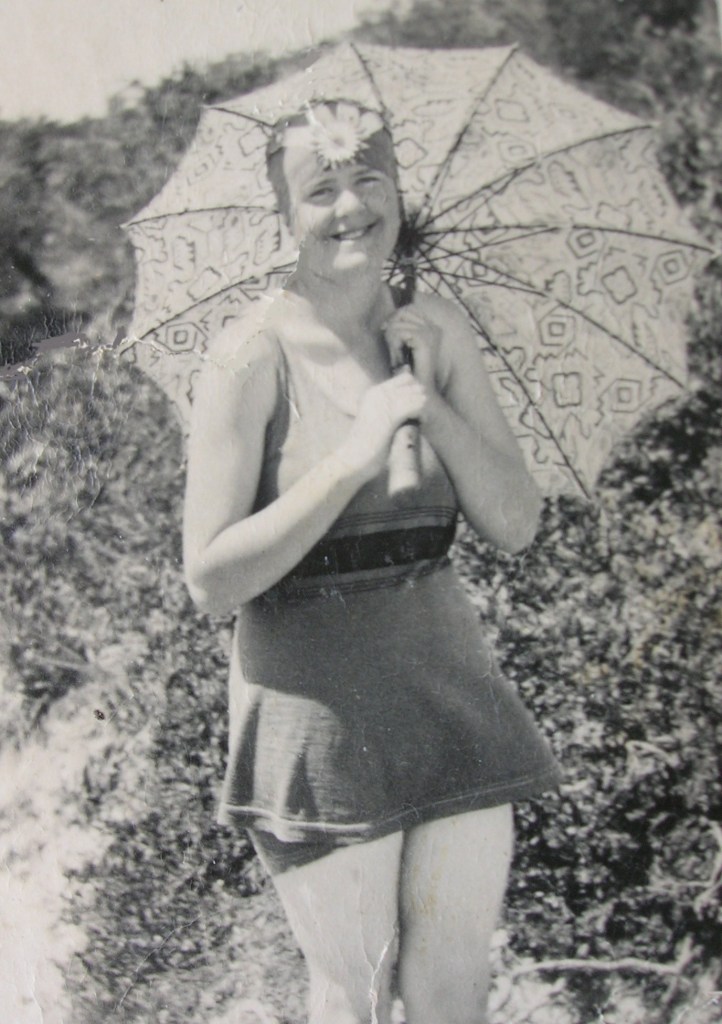
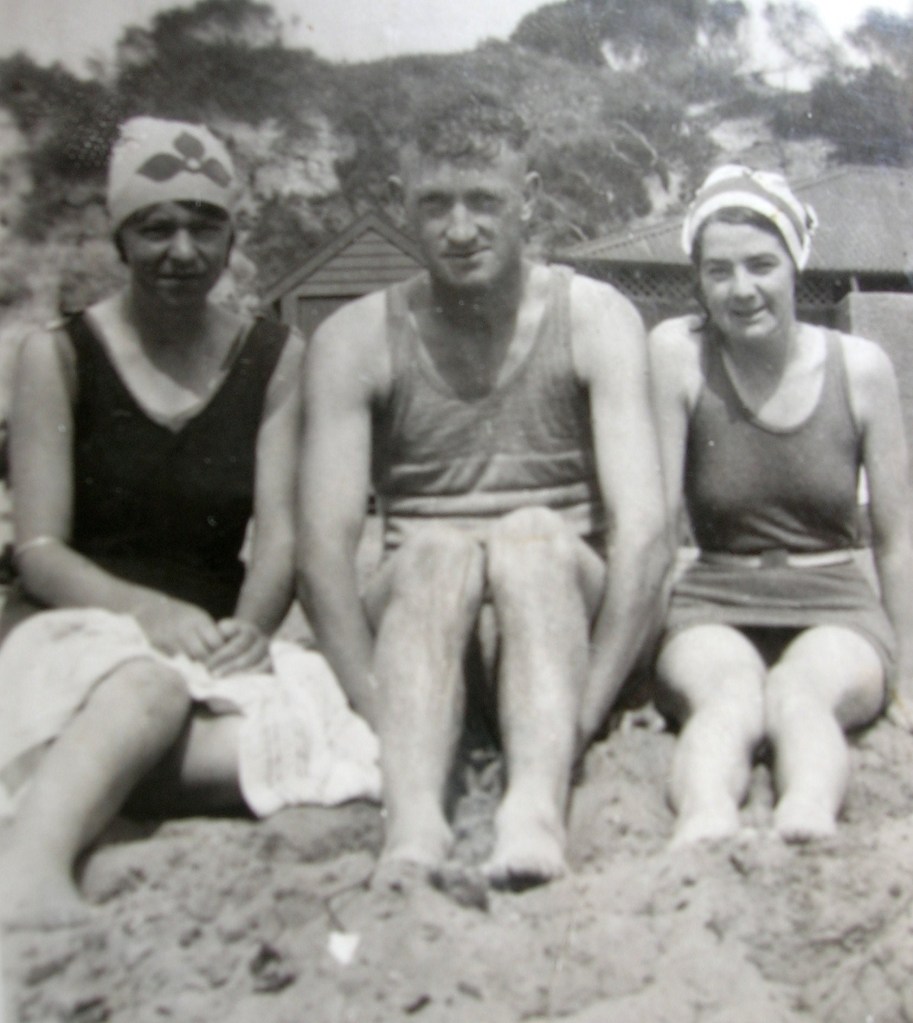
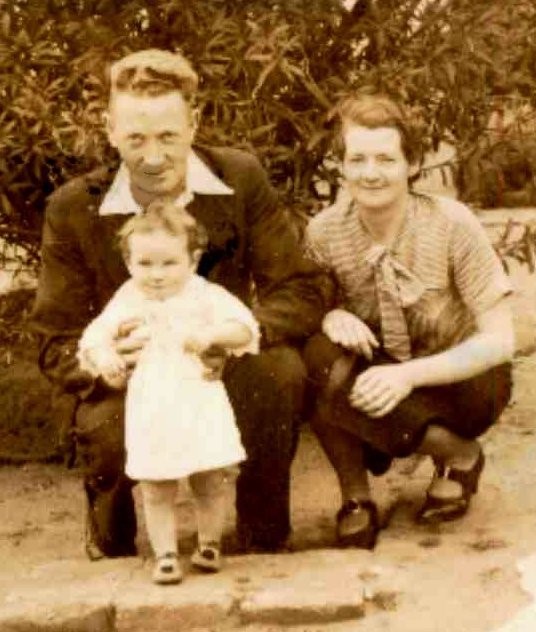
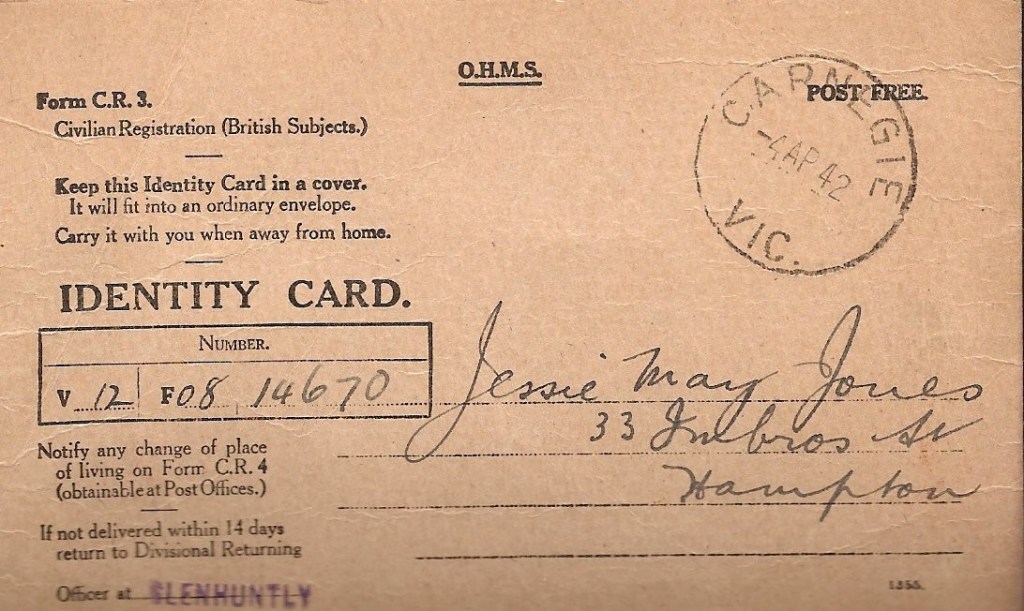
Despite the restrictions of the war we still had our annual holidays. We got up at 5.00am and walked to the Five Lines Hotel with all our cases and caught the tram to the railway station to catch the 7.00am train to Melbourne. This was quite an effort because we always had at least two very large cases. There were odd occasions later when a taxi was called. The earliest Christmas holidays that I can remember were at Hampton where we rented a house on the main road opposite the beach. The most remarkable thing about the house was that it had a pipe organ in it – not that I ever heard it played.. This was a great place to holiday because we would visit Uncle Ern and Auntie Jessie who lived in Hampton. Uncle Ern was always jovial and good natured. Trixie was, like Anne, a lot younger than me so that our close relationship did not develop for many years. After Hampton we went to Dromana for a couple of years before heading off to Queenscliff from about 1947 onwards. We regularly went to visit Aunty Rube Ludeman in Thornbury. Uncle Herm was Grandma Doig’s brother and had lost his sight in WW1 as a member of the first AIF when a bullet ricocheted off something he was carrying damaging his eyes. This was interesting because the family back in Melbourne had had property vandalized because of their German background. Uncle Herm had a Braille pocket watch which I found quite fascinating. Aunty Rube’s sister, Elsey McLachlan, was very small, single, smoked, swore and worked at the Navy Club. I was in awe of her. Grandpop Doig often stayed with Aunty Rube at Rennie St Thornbury. He then walked the 9 kms into Melbourne and back. There was excitement on one occasion when we were staying there when a man over the road hanged himself in the back shed. I think Dad was called to use his First Aid skills to resuscitate the man – without success.
About 1942 word came through that John Potter, who had married Gladys Brauman across the road was missing in action after the Japanese took Rabaul. It was some time before it was learned that he had escaped with nine others in a small boat and sailed, with very little food or water, for 10 days before reaching safety. There was much rejoicing around our area. On the lighter side the Provos (Military Police) raided the Ermils who lived in our street but backed onto Aunty Jean’s place. They were looking for one of the boys who had gone AWOL from the army. There was quite a chase over the fences and through the neighbours’back yards. This provided the neighbourhood with several weeks worth of gossip. It was about this time that I had a brush with the army on my way home from school, when I was
skimming stones along the path between the baths and the croquet courts. A stone shot out onto the road and into the door of an American Staff car. I was absolutely terrified. I sneaked home around all the back streets and over the Hustlers where I could get a view of our house. There was enormous relief to find that the car was not parked out the front. It never occurred to me to wonder how they would have got my address. I guess I thought then that the Americans were all powerful and knew everything. Another memory of the time is the number of cars which had a monstrous furnace on the back (called gas burners) which created gas to fuel the car. I often wonder what lasting damage these did to the engine. The car headlights also had a metal covering with a narrow slit cut in them for the light to filter through (albeit a very small amount).
I had been achieving fairly average results at school and my love of drawing had been well established by now. I entered Grade five in 1944 with my teacher being Mr Don Campbell. He was a good disciplinarian and considered the strap to be a good deterrant as well as an excellent rehabilitator. We had actually graduated to the second floor of the school in Grade 4, where I found there were some disadvantages such as having to carry the milk and the firewood upstairs. However this was outweighed by the fact that we were now writing with real pens and nibs. The inkwells in the desk were a problem as somehow or other they always got filled up with chalk or little bits of paper. My art works were mainly drawings and comic strips which allowed me to conduct my own private little war against the “Huns” and the “Nips”. Spitfires rated very highly in my rather romantic list of military equipment. I had a wonderful jigsaw of a Spitfire shooting down an enemy Messerschmitt 109. Mr Campbell’s daughter Coral was also in our class. I guess at this stage I was a fairly middle of the road student. The teacher once asked us whether we liked our Mother more than our Father and I was very surprised at the reaction of the teacher when I said I liked my Father better. I was made to feel that this was a most unusual attitude. Being appointed a blackboard monitor or a filler of inkwells in desks were considered very significant appointments.
Occasionally there were huge services conducted on the main oval (later to be called the Queen Elizabeth oval) and I remember them as incredibly moving occasions. Brass Bands would accompany the huge crowds of people singing the hymns and very stirring addresses would be given. Songs such as Rock of Ages, Abide with Me, and Lead Kindly Light have always brought back to me the emotion charged atmosphere of those special days when the whole community, who were looking at a very uncertain future, gave vent to their feelings and emotions.
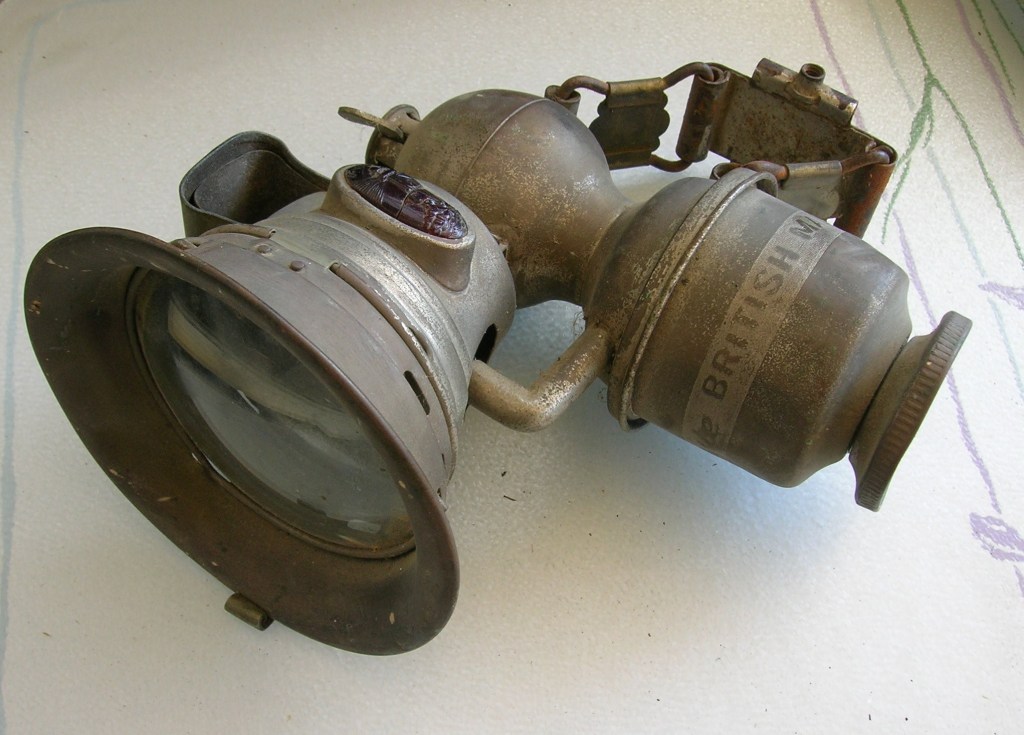
Because we did not have a car Dad used to dink me around on his bike. He had set up a seat on the cross bar and a metal footrest on the sloping frame. We used to head off all over Bendigo and my favourite ride was out to Long Gully to Zeliski’s Nursery. Our friends the Harveys lived out near here and we often used to call on them on the way. Auntie Ess was a very kind motherly lady, with a big smile and a continuous supply of beautiful cakes. Uncle Jim was a man with a very good sense of humour and I suspect was very partial to a beer. Another favourite ride was to be taken to the “loco” near the station where the locomotives were serviced. Dad enjoyed his trains even on his days off. Alcohol was never mentioned in our house as alcohol was considered by Mum to be one of the ultimate sins. I can count on half the fingers of one hand the number of times alcohol ever came into the house. Uncle Frank and Aunty Gladys Robinson used to stay with us each Easter so Frank could participate in the Easter Tennis Tournament. He sometimes brought a bottle of beer and because the atmosphere was so frigid it did not need to go in the ice chest. Mum did tolerate a non-alcoholic beverage called “6 Oclock Lager” (made by Cohn’s Soft Drinks) which looked like beer but that was where any comparison ended ! As a result, in my wanderings around the area, I found the hotels (and there were 85 in Bendigo at the time) to be places of incredible mystery and interest. Many years would pass before I was able to explore these mysteries. The Cambrian around the corner in Arnold Street was of particular interest. I was fascinated by the names of the various hotels – the Shamrock, Hibernian, the Allies, the Old House from Home, the Rising Sun, the Caledonian, The Empire, the Rifle Brigade, the Five Lines, etc. The Shamrock was the ultimate mystery, not only for its opulence, but also because Dame Nellie Melba had once stayed there and was so incensed by the Post Office Clock chiming all night that she forced the City Council to take measures to stop it chiming from midnight to 6.00am. Before the electric bike dynamo Dad had to use an acetylene Light which sat on the front of the bike. Water dripped onto the acetylene , creating a gas which he would put a match to, thus create the light necessary to see where he was going
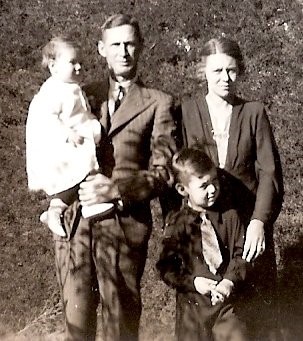
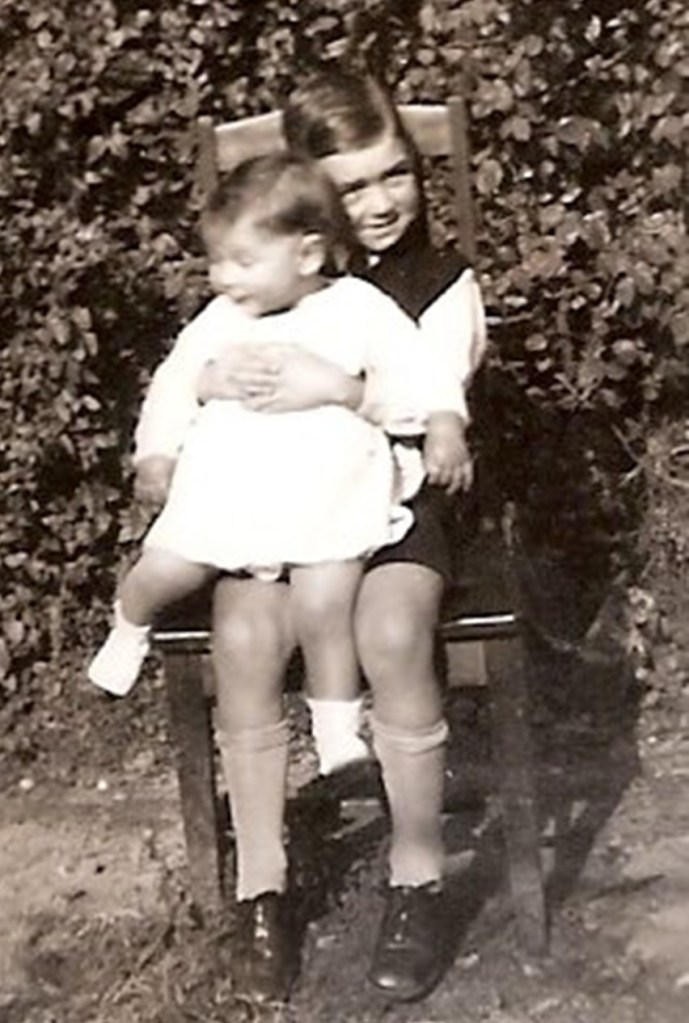
Because of our age difference Anne and I did not play together very much and at this time Barbara was probably more like a sister than Anne. Dad had built Anne and me a ‘cubby house’ each up beside his workshop. There was not a lot of room there but I could still make model aeroplanes, crystal sets, etc. My favourite toy was my Meccano Set with which I created wonderful structures and machines. These were enhanced later when I got a wind up motor to drive them. I spent many a wonderful hour in my dreamworld with this set.
Grandpop Doig played a very significant role in my life, even at this early age. He always came for tea on Sunday nights and was a most impressive person to a small lad like me. He used to take us kids, Pat and Faye Doig, Joan and Pam Knight for walks out past Comet Hill to Holdsworth Road on a Sunday. This was all bush at the time with lots of relics from the gold mining days. It was very exciting as you would suddenly come out of the Chinese scrub and there would be a narrow gauge railway line with some old trucks on it which had been used for taking the mullock from the shaft to the waste heap. Granddad could always find specs of gold which we could never do. He showed us what berries could be eaten from the native trees, and he had a wonderful fund of stories from his past. You never messed around with him as he pulled you into line very smartly. I loved to hear the stories told by Uncle Bill and Aunty Jean about Granddad’s exploits in the past. For instance all the wooden poppet heads in Bendigo had been built by him. People told me how he could walk around on a piece of 4”X4” on top of a poppet head without any hesitation and one story told of a worker who dropped a hammer from a great height which just grazed Granddad’s head. The worker wouldn’t come down till it got dark. On another occasion he wanted to fire an employee (whilst working at Swan Hill) after the man had killed a magpie. Glen and Bill had to do a lot of talking to get him to keep the man on, his saving grace being that he had a wife and children. This contrasted somewhat with the story he proudly told me many years later that he could shoot the head off a flying swan at 80 metres with an old muzzle loader. Grandpop had a pet dog called Jack, a very nondescript but faithful old dog which followed him everywhere.
I guess it was about this time that I became aware of a sense of community or rather of neighbourhood. My world extended about four blocks in each direction. To go further was really an adventure. Apart from the Thompsons, the Knights, and the Doigs, the Braumans were an important part of my life. Mr Brauman was a green grocer who travelled around Bendigo in his horse and four wheeled covered wagon and would arrive at the back door with his basket of goodies to show and then take an order. He was a very quiet man, which was in contrast to Mrs Brauman and the three girls, Gladys, Ivy and Thelma. Despite her miniature size Mrs Brauman was very cheerful, and always made you feel very welcome as did the girls. There were always cakes and other goodies and at one stage I used to call in on my way back to school to get another helping of pudding. They used to make up verses such as :-
Glen Jones,
Broke his bones,
Jumping over
Cherry stones.
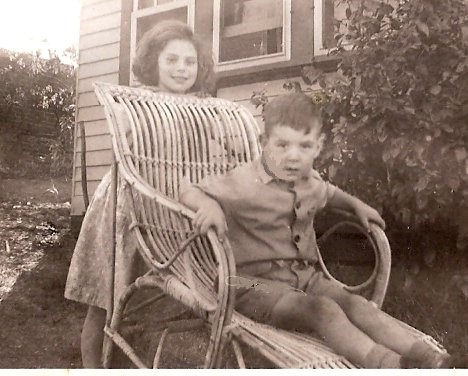
The Braumans also had a 1939 Ford V8 which was pretty high on my list of the most important things in the world. Apparently, much to Glad’s amusement, I regularly assured her that if John didn’t come back I would look after her. They always maintained that I made myself sick every year eating the unripened fruit from their trees (especially the grapes). The Fultons were also good friends although they were a little more aloof and kept their distance to some extent. Mr Fulton was a Country Roads Board Inspector who checked for overloading of trucks. He was thoroughly disliked by all the truckies. I thought he was very distinguished with a very upright bearing and an almost English clip to his voice. This was perhaps due to his First World War experience as a pilot and he had been captured twice by the Germans and escaped both time by burrowing under the fence with a screwdriver. They had four children, all a lot older than us. Alec was the oldest and at this time was serving in the RAAF in North Queensland. He sent me a coconut in the mail which I treasured for many years. Verna was next and married to a farmer from Bridgewater who unfortunately died at a very early age leaving her with a young son, Frankie. Gavin also joined the RAAF in the last year of the war and later went on to become a primary school teacher. Catherine was about three or four years older than me, very attractive, and a very competent Mezzo-soprano (not that I was very impressed then with her skills in this area). My most significant memory of Catherine at this time was playing “doctors and nurses” beside their house. I have always regretted my total ignorance at the time of all things male and female. Mr Fulton drove Ford V8s which also put him on a bit of a pedestal. Each morning at 8.00am while we were having breakfast he would back the car out of the garage and let it warm up (the melodic throb of the V8) before driving off. This annoyed Mum and at one stage she had to tell him to move the car as it was just above Anne’s window and woke her up.
On the other side of the Fultons was one of the most magical homes that I had ever seen. It was on an acre of land and totally surrounded by a high brick wall. Dad assured me that there were enough bricks in it to build four houses. It had originally been a mine manager’s residence and at the time was owned by Dr Biggs. I used to love climbing up the wall to look over into the yard. It had a tennis court, stables and a real flagpole. At one stage Uncle Thene and Auntie Edie rented it, but before my time. I often wished I could hop over the fence and explore the unknown wonders of the garden, the house and the old stables.
The Dumont family lived next to us in Frederick St although they later went to live in White Hills where they bought a Poultry farm. There were three children, all of whom were younger that me. We did visit them a couple of times although the time I fell off a horse and hit my head finished that. The two girls made a name for themselves – Fay as the Convenor of the Melbourne Singers (one of the leading choirs in Australia) and Ruth was the spokesperson for the Kindergarten teachers in Victoria. Neither married.
About the end of the war we used to go over to the Comet Hill and bring back large amounts of chinese scrub with which to build bonfires on the large unused area of grassland beside Uncle Ted’s place. This happened each year on King’s Birthday weekend and Guy Fawkes day. This was a very happy time and all the neighbours would turn out for the occasion. Everyone had crackers and it was always considered good fun to let off a cracker behind some unsuspecting person. It was not always appreciated! Usually someone got burned and there was all hell to pay. Sometimes the grownups would provide a skyrocket which was quite exciting. This area beside the Thompsons was also the regular footy ground for the kick to kick occasions after school and at weekends. I had a great love of cricket which was nurtured by Uncle Ken Knight who was an outstanding cricketer himself. He played for Golden Square and captained Bendigo on many occasions at Country Week and against visiting international teams. He spent much time coaching me and I spent many hours hitting a ball in a stocking hanging from the clothes line. He had also been an excellent footballer during the Depression when he played for Sandhurst. After their marriage in 1941 Uncle Ken used to come up each Tuesday evening for a chat. During the war, when he was working at the Economic weaving factory at Ironbark, he regularly brought up lots of offcuts of “swarmy” material. This was a soft, shiny, material which made excellent underwear for ladies. Uncle Ken also intrigued me by his ability to make a “Mexican Jumping Bean” from a ball bearing and silver paper. The finished product looked like a jelly bean and would roll around in all different directions.
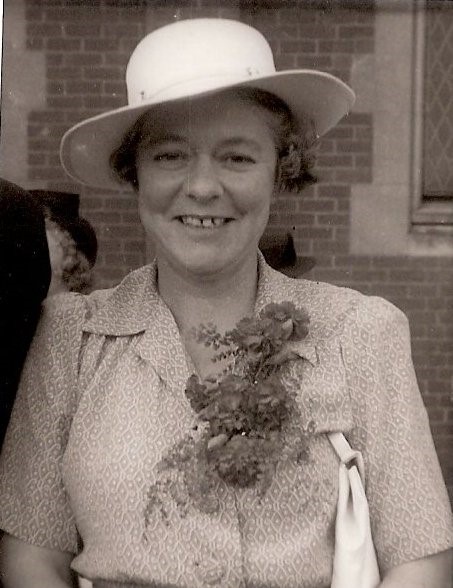
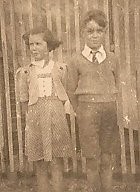
Mum was the President of the Red Cross and there were always meetings and working bees at our house. I had the task of going around the district every Saturday morning to collect money for the Red Cross. This covered a rather large area and I usually collected about five pounds ($10).
I remember very little about the end of the war except to recall it was a time of great euphoria. All the local servicemen came home and were treated like heroes. Two people in particular received special attention. One was the Gallagher chap who had been a prisoner of war and also Bill Trembath who won the DCM for sticking to his gun during a kamikaze raid on the “Canberra”. I will always recall August the 15th as the end of the Second World War (in the Pacific)
The death of my Grandfather Jones is a rather vague event as we did not attend the funeral and all we had was the vague murmurings of the adults as they spoke about his death after a stroke at the age of 76. Adults did not usually speak about death in front of the children as though it was some taboo topic. As a result death remained a vague and mysterious event which occurred from time to time and brought great sadness to families. I once sneaked a look through the door of the morgue at the Bendigo hospital where there was a body wrapped in a sheet on the table. This did nothing to help resolve the mysteries associated with death.
POSTSCRIPT TO CHAPTER 1
ANECDOTES
At this time Public Toilets had enamelled signs in them warning of the dangers of catching venereal diseases (which I assumed meant from toilet seats.) As a result I could not bring myself to sit on a public toilet seat for many, many years.
Horse drawn vehicles were still in use up until the late 40’s Most were commercial vehicles such as drays, milk carts etc. However there were still a small number of ‘jinkers’ in use during this time.
“A” and “T” model Fords were very popular (and reliable).
At the end of the war many army vehicles were auctioned off a various disposal points. I can remember Uncle Adam Armstrong staying overnight with us after purchasing a five ton Ford truck and a Jeep at Tocumwal.
There was always a great mystery about some of the undergarments worn by ladies. One could only see them on the clothes line and feel their hard rigid shape when dancing with the “older” ladies.
I was often sent out by Mum to find some mine shafts where I could get some “Maiden Hair” ferns to bring home for her to put into pots for the fernery.
OBITUARY TO JOHN PRICE JONES
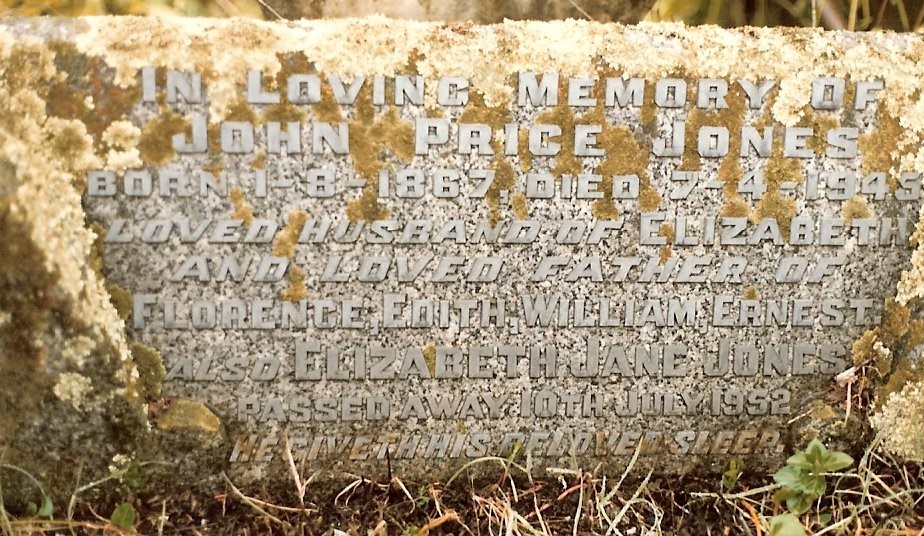
The death occurred at his home in Malmsbury on the 6th of April of Mr John P. Jones, a well known and highly esteemed resident of the township. The late Mr Jones was born at Taradale 76 years ago of Welsh parents who, with so many other of their countrymen, settled in this then prosperous gold producing centre. As a boy he attended worship and Sunday school in the old Presbyterian Church which for years past has been unused until recently when it was re-opened as a centre for youth work for the Presbytery of Macedon. With the outbreak of the discovery of gold in Western Australia Mr Jones, as a young man, tried his fortune on the fields and , amongst other employment, he worked on the extension of the railhead to Kalgoorlie from Perth, which is now part of the interstate line linking Perth to Melbourne. On his return to Victoria Mr Jones settled in Malmsbury and after following several occupations he became a member of the Shire Council staff and continued this work until retiring some years ago. Mr Jones was a skilled workman, a trusted friend, and a highly appreciated citizen. He was deeply interested in the local Presbyterian Church and for years gave loyal service as an elder and member of the board of management. He leaves to mourn him a widow, two sons and two daughters. He was one of the earliest of the members of the Malmsbury Tent of the Independent Order of Rechabites, having been for 57 years a member of the Tent.
The burial took place on Easter Saturday, when his remains were laid to rest in the Malmsbury Cemetery. The services at the home and the graveside were conducted by the Rev. Neil McDonald, of St Andrews, Kyneton, and the coffin covered with many beautiful floral tributes, was carried by Messrs W. and E. Jones (sons), A. Armstrong and J. Cook (sons-in-law),
The pall was supported by Messrs A. Wallis (nephew), C. Rayson (IOR), H. Prewett, N. Carter,
J. Hill and J. Hannigan. A large and representative gathering of citizens followed his remains to their last resting place, and amongst the flowers was a handsome wreath sent by officers and members of the Malmsbury Presbyterian Church. The mortuary arrangements were carried out under the direction of Mr W. Raymer.
 Jones Family Histories